Rainy Season Ready: Why Gutter Installation Is Essential


The first heavy rain of the season has a way of exposing every weakness a house has been hiding. Water sheets off the roof, splashes against siding, ponds near the foundation, and finds cracks no one noticed during dry weather. Homeowners often focus on shingles, windows, and exterior paint, but one of the most important defenses sits right at the roofline. Proper Gutter Installation is not a cosmetic upgrade. It is a core part of how a house manages water.
That matters more than many people realize. A roof does not simply keep rain out. It also collects a surprising amount of water and sends it somewhere. On a modest home, a single inch of rainfall can translate into hundreds of gallons rushing off the roof in a short period. Without a controlled path, that water does what gravity tells it to do. It pours over eaves, beats against landscaping, saturates the soil beside the house, and slowly turns small vulnerabilities into expensive repairs.
A well-designed gutter system changes that equation. It captures runoff, channels it through downspouts, and directs it away from the building envelope. The result is less erosion, less staining, less wood rot, and far less risk to the foundation. In regions with regular storms, long wet seasons, or sudden downpours, gutters are not optional in any practical sense. They are part of the structure’s water management system, just as flashing and drainage are.
What rain really does to an unprotected home
People often underestimate roof runoff because they picture rain falling straight down in a gentle pattern. Real storms are not so polite. Water gains speed as it travels down roof slopes, and the force is concentrated along the roof edge. On a home without gutters, or with damaged ones, the runoff falls in narrow, repeated paths. Over time, those paths create visible and hidden damage.
One of the first signs is soil erosion. Flower beds below the eaves begin to wash out. Mulch migrates. Bare spots form where water has been landing repeatedly. If the grade near the home was carefully designed to slope water away, erosion can flatten or reverse that slope. Once that happens, water starts lingering where it should not, often right against the foundation wall.
The siding takes a beating too. Brick can handle a lot, but constant splashback leaves staining and encourages moss or algae in shaded areas. Wood trim and fascia are more vulnerable. Paint begins to fail. Small joints stay wet longer than they should. In older homes, especially those with wood soffits or decorative trim details, repeated wetting leads to soft spots and rot.
Basements and crawl spaces tell the same story from below. Many moisture problems are blamed on poor waterproofing alone, but uncontrolled roof runoff is frequently part of the chain. When thousands of gallons are dumped beside the foundation over the course of a rainy month, some of that moisture will move downward and inward. It may show up as a damp wall, a musty odor, efflorescence on masonry, or standing water after a storm.
Even concrete surfaces suffer. Driveways and walkways develop pitting or settle unevenly when runoff repeatedly saturates the soil beneath them. Steps near entryways become slippery from algae growth. In colder climates, the cycle gets worse when freeze-thaw action enters the picture, but even in milder regions, water is persistent. It does not need dramatic conditions to cause trouble. It only needs time and repetition.
Why Gutter Installation is more important before the rainy season than during it
There is a practical reason seasoned contractors encourage homeowners to address gutters before storms arrive. Water management systems are easiest to inspect, install, and test under calm conditions. Once the rainy season starts, small deficiencies become urgent problems, and urgent work often costs more.
Installing gutters ahead of the wet season allows time to evaluate roof edges, fascia condition, downspout placement, and drainage around the perimeter. If rot is hidden behind old gutter brackets, it can be repaired properly instead of patched in a rush. If a downspout extension needs to cross a walkway or tie into existing drainage, that routing can be planned with some care rather than improvised after the first flooded flower bed.
There is also the issue of scheduling. Good installers tend to get busy when weather turns. The first major storm sends many homeowners calling at once, usually after seeing water pouring over entry doors or pooling near the garage. At that point, availability tightens. Waiting until the problem is visible often means living with the problem for longer than expected.
I have seen this play out on otherwise well-maintained homes. The owner knew gutters were aging, but they still looked acceptable from the ground. Then a week of rain exposed leaking seams, sagging sections, and a downspout that emptied too close to the foundation. What could have been a planned project in early autumn became emergency triage in the middle of a storm cycle. The work still got done, but not before water found its way into a finished basement storage room.
The hidden places where poor drainage gets expensive
Most people notice the obvious signs first, overflowing gutters, splash marks on siding, and trenches in the mulch. The more serious costs often build in quieter areas.
Fascia boards are a common casualty. When gutters are undersized, improperly pitched, or clogged, standing water sits against the roof edge. That moisture works into wood, behind paint, and into fastener holes. By the time the outside surface looks compromised, the board behind it may already be soft. Replacing fascia is not always a major reconstruction job, but it adds labor and materials that could have been avoided.
Window and door trim on lower levels can also suffer from excessive splashback. If a roof valley concentrates water near one corner of the house, the volume hitting the ground can bounce moisture several feet upward. Over months and years, that pattern shortens the life of paint and caulk. On masonry homes, it can leave stubborn staining. On wood-sided homes, it can become a maintenance cycle that never quite ends until drainage is corrected.
Foundations deserve special attention because the damage there is slow and often misunderstood. Not every crack is caused by roof runoff, and not every wet basement is solved by gutters alone. Still, managing surface water is one of the first and most sensible lines of defense. When soil repeatedly expands and contracts with moisture swings, movement follows. That movement may be subtle, but houses respond to subtle changes. Doors stick. Drywall develops hairline cracks. Floors near exterior walls feel slightly off. These issues have multiple possible causes, but uncontrolled water is a factor that should never be dismissed.
Not all gutter systems perform the same
Homeowners sometimes treat gutters like interchangeable hardware, but design choices matter. Material, profile, capacity, hanger spacing, downspout size, and outlet placement all influence performance. A system that works adequately on a small, simple roof may struggle on a larger home with steep pitches, roof valleys, dormers, and concentrated runoff areas.
Seamless aluminum remains a popular choice for good reason. It is relatively lightweight, resists rust, and can be fabricated on site to fit long runs with fewer joints. Fewer seams usually mean fewer leak points. Steel offers strength but may require more attention to coatings over time. Copper has a long service life and a distinctive appearance, though its cost places it in a different category altogether.
Size is another area where shortcuts cause problems. Standard gutters may be suitable for many homes, but houses with steep roofs or large roof planes often benefit from oversized systems. This is especially true in areas prone to intense cloudbursts. A gutter that can handle average rainfall may still overflow in the storms that do the most damage. Good installers calculate runoff demands based on roof area and local weather patterns rather than guessing.
Downspouts deserve equal attention. Too few downspouts force gutters to carry more water farther, increasing the chance of overflow. Poor placement can dump water in exactly the wrong location, such as beside a porch footing or along a walkway where ice and https://charlieuyvd192.novacrestiq.com/posts/how-to-ensure-safe-and-effective-gutter-installation staining become concerns. The best systems think beyond collection and address discharge. Capturing water is only half the job. Getting it away from the house is the other half.
What proper installation actually involves
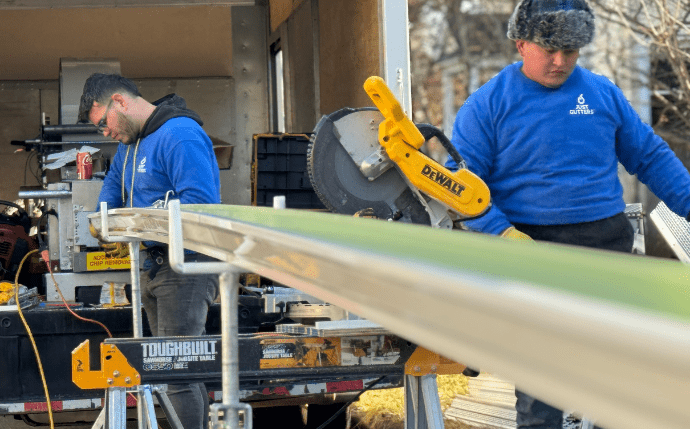
From the ground, gutters look simple. In practice, proper Gutter Installation involves a series of decisions that affect durability and drainage. The goal is not merely to attach metal to the edge of the roof. The goal is to create a controlled path for water that holds up under seasonal stress.
A professional installation usually starts with measurement and layout. The installer checks roof lines, identifies high-flow sections, and plans the pitch so water moves efficiently toward each outlet. The slope is slight, but it has to be deliberate. Too little pitch and water lingers. Too much and the system can look uneven while reducing effective capacity at one end.
Attachment matters more than many homeowners expect. Gutters fastened into weak or deteriorated fascia will not stay aligned for long, no matter how good the material is. Hidden hangers generally provide a cleaner appearance and strong support, but spacing needs to reflect the expected load. In areas with frequent heavy rain, wind, or occasional snow, sturdier support is worth the investment.
Sealing and joint work separate decent installations from troublesome ones. End caps, miters, outlets, and transitions need clean fabrication and proper sealing. Leaks at seams are among the most common complaints on lower-quality jobs. So are downspouts that twist, loosen, or back up because the outlet opening was undersized or poorly placed.
The discharge point should always be part of the conversation. A downspout ending six inches from the foundation solves very little. Extensions, splash blocks, underground drains, or well-planned dispersal areas may all be appropriate depending on the site. There is no universal answer. A narrow urban lot, a heavily landscaped suburban yard, and a sloped rural property each call for different judgment.
Signs your current gutters are not ready for the next storm
Some gutter problems announce themselves loudly. Others are easy to miss until damage is underway. Before the rainy season begins, it is worth looking for the following warning signs:
- Water spills over the gutter edge during moderate rain, not just during severe storms.
- Sections sag, pull away from the fascia, or show standing water after the rain stops.
- Paint is peeling near the roofline, or there are dark streaks on siding and trim below the gutters.
- Soil is washed out beneath eaves, especially near valleys or corners of the roof.
- Downspouts discharge too close to the home, leading to damp soil, puddling, or basement moisture.
None of these symptoms should be ignored. Even one can indicate a capacity problem, a slope issue, structural weakness, or chronic clogging. The fix may be straightforward, but waiting gives water more opportunities to exploit the weakness.
The role of maintenance after installation
A strong installation reduces trouble, but it does not remove the need for maintenance. Leaves, seed pods, roof grit, and windblown debris collect over time. In heavily treed areas, a clean gutter in early spring can be partly blocked by midsummer, especially after a storm that strips branches or blossoms.
Regular cleaning intervals depend on the site. Homes under pine, oak, or maple can need attention more than once a year. Houses in open areas may go longer. The point is not to follow a rigid calendar. It is to understand what your property sheds and how your system handles it.
Guards can help, though they are not magic. Some perform well against larger leaves but still allow fine debris to build up. Others reduce maintenance frequency but complicate cleaning when buildup occurs. On homes where access is difficult or where tree cover is constant, guards can be useful. On simpler homes with light debris, periodic manual cleaning may be the better value. The right choice depends on maintenance habits, roof design, and budget.
A quick visual check during rainfall is one of the best diagnostic tools a homeowner has. You can see immediately whether water is moving to downspouts, overshooting corners, leaking at seams, or pooling at discharge points. That kind of observation catches issues long before interior damage appears.
When repairs are enough, and when replacement makes more sense
Not every gutter problem calls for a full replacement. If the system is relatively new and the issue is isolated, a repair may be entirely appropriate. Resealing a seam, reattaching a loose section, adjusting slope, or adding an extension can restore performance quickly.
Replacement becomes the better path when defects are widespread. Multiple leaks, recurring clogs caused by poor sizing, significant corrosion, chronic sagging, or deteriorated fascia behind the system often point to deeper shortcomings. Investing in piecemeal repairs on a poorly designed setup can become a false economy. You spend money repeatedly while the underlying drainage problem remains.
Age should be considered in context, not as a fixed rule. Some well-installed systems last for decades with routine care. Others struggle much sooner because of storm exposure, debris load, inferior fastening, or neglect. The real question is whether the existing gutters still manage water reliably under the conditions your home actually faces.
Choosing an installer with sound judgment
Price matters, but experience matters more when it comes to drainage. A low bid can look attractive until the first major storm reveals overflow at roof valleys or standing water near the front walk. Good installers do more than quote linear footage. They ask where water currently collects, whether basement moisture has been an issue, how the yard drains, and where high-volume roof sections are located.
A worthwhile consultation should include discussion of capacity, downspout count, attachment method, and discharge plan. If the proposal focuses only on color and material thickness without addressing runoff behavior, it may be too superficial. Water management is the purpose of the system. Appearance is important, but it is secondary.
It is also wise to ask how the contractor handles fascia inspection and whether minor wood repairs can be addressed if hidden damage is found during removal. Many gutter replacements expose areas that looked sound from below but were compromised behind the old system. Clear communication there prevents unpleasant surprises once work starts.
The cost of gutters versus the cost of neglect
Home improvement decisions often come down to timing and budget, so it is fair to ask whether Gutter Installation is urgent if there is no dramatic failure yet. In many cases, the most honest answer is yes, especially before a known rainy season.
The cost of a new system varies with house size, height, material, complexity, and drainage features. A straightforward single-story installation costs far less than a multi-level home with steep roofs, custom corners, and underground drainage connections. But even at the higher end, the expense usually remains modest compared with foundation waterproofing, rot repair, siding replacement, or interior remediation after water intrusion.
Water damage has a way of multiplying costs because it rarely stops at one surface. Wet trim leads to paint failure. Persistent moisture leads to mold concerns. Saturated soil affects foundation behavior. Splashback stains walls and shortens the life of finishes. By the time the damage is obvious, the original problem, uncontrolled runoff, may look small compared with the repairs it triggered.
That is why gutters are best viewed not as an accessory but as preventive infrastructure. People rarely celebrate them the way they celebrate a kitchen remodel or new flooring. Yet few upgrades do more to protect the shell of a home through the wettest months of the year.
A short pre-season check that pays off
If the rainy season is approaching, a simple review can prevent headaches later. Walk the perimeter during daylight and note how the roofline, soil, and drainage areas look. Pay attention to corners, valleys, and places where water has obviously hit before. If you can do so safely, look into the gutters for debris and standing water. If you cannot, have them inspected.
A practical pre-season review should include:
- Checking for clogs, loose sections, and visible seam leaks.
- Confirming that gutters pitch correctly and do not hold stagnant water.
- Making sure downspouts discharge well away from the foundation.
- Looking for fascia rot, peeling paint, or staining near the roof edge.
- Watching how water behaves during the first substantial rain.
That kind of inspection does not require guesswork or technical jargon. It simply requires attention before the weather forces the issue. If problems show up, addressing them early is almost always easier than managing the consequences later.
The rainy season does not create weakness in a house so much as reveal it. Gutters are one of the clearest examples of that principle. When they are well designed, properly installed, and maintained with some consistency, they quietly protect nearly every part of the exterior envelope. When they are missing, undersized, clogged, or failing, rain begins writing its own plan for your property.
A home can endure a lot, but it should never have to fight its own roof runoff. Proper Gutter Installation gives water a route, keeps it moving, and buys the house what every structure needs during wet weather, control.
Just Gutters LLC
Address: 262 Main St, Hackettstown, NJ 07840
Phone number: +12013319454
FAQ About Gutter Installation Hackettstown
Can I install a gutter myself?
Yes, you can install gutters yourself. DIYers typically use aluminum or vinyl sections from home improvement stores. The project requires basic tools, precise measuring, and comfort working on ladders. Key steps include snapping a chalk line for a slight slope (1/4 inch per 10 feet toward downspouts), securing hangers every 2 feet, and caulking all joints securely.
How much does body contouring usually cost?
The Home Depot typically charges between $1,000 and $3,600 for a standard professional gutter installation on a typical single-family home with 200 linear feet of gutters. Calculated on a per-foot basis, the cost usually ranges from $5 to $18 per linear foot, highly dependent on the material you select.
How much does a 40 ft seamless gutter cost?
A 40 ft seamless gutter run will cost between $240 and $1,120+ fully installed, depending on the material you choose. Because seamless gutters require specialized on-site fabrication machines, they are rarely sold as DIY kits and are priced per linear foot.